

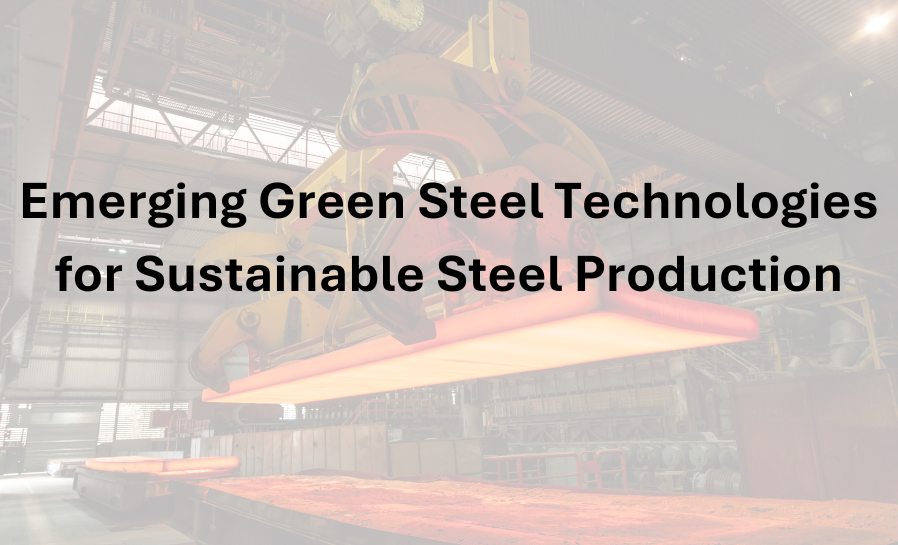
The steel industry is undergoing a major transformation as it seeks to reduce carbon emissions and align with global sustainability goals. Traditional steelmaking, which relies on coal-based blast furnaces, is responsible for approximately 7-9% of global CO₂ emissions. To address this challenge, companies are investing in new Greensteel technologies that enables low-carbon or carbon-neutral steel production.
Hydrogen-Based Direct Reduced Iron (H₂-DRI)
One of the most promising Greensteel technologies is Hydrogen Direct Reduction (H₂-DRI), which replaces coal with green hydrogen as the reducing agent in iron ore processing. This method eliminates nearly all CO₂ emissions from the steelmaking process.
Electrochemical Ironmaking
Startups such as Boston Metal are developing molten oxide electrolysis, a process that uses electricity to extract iron from ore without carbon emissions. This method has the potential to revolutionize steel production, making it entirely fossil-free when powered by renewable energy.
Electric Arc Furnaces (EAF) with Scrap Steel
Recycling steel in Electric Arc Furnaces (EAFs) is another key strategy for reducing emissions. When powered by renewable electricity, EAFs can significantly lower the carbon footprint of steel production. This method is widely used in regions with strong scrap steel supply chains, such as Europe and North America.
Carbon Capture, Utilization, and Storage (CCUS)
While transitioning to hydrogen-based steelmaking will take time, Carbon Capture, Utilization, and Storage (CCUS) offers an intermediate solution. CCUS technologies trap CO₂ emissions from blast furnaces, preventing them from entering the atmosphere. Some steelmakers are integrating CCUS into existing facilities to reduce emissions while maintaining traditional production methods.
Biomass-Based Reduction
An emerging alternative is biomass-based iron reduction, where biocarbon replaces coal as the reducing agent. This method has shown potential in pilot projects, particularly in regions with abundant biomass resources. However, scalability remains a challenge.
Plasma Reduction & Microwave Heating
Innovative approaches such as plasma reduction and microwave heating are being explored to improve iron ore processing efficiency. These technologies use high-energy plasma or microwave radiation to reduce iron ore without carbon emissions, offering potential breakthroughs in low-carbon steelmaking.


Source: www.mckinsey.com
Conclusion
Despite the promise of Greensteel technologies, challenges such as high costs, infrastructure gaps, and regulatory uncertainties slow its adoption. Hydrogen-based steelmaking demands large-scale green hydrogen production, while carbon capture faces efficiency concerns. To accelerate the transition, industries must invest in renewable energy, expand hydrogen infrastructure, and implement supportive policies. Collaboration between governments and corporations will be key to overcoming barriers and making sustainable steel production viable on a global scale.


